
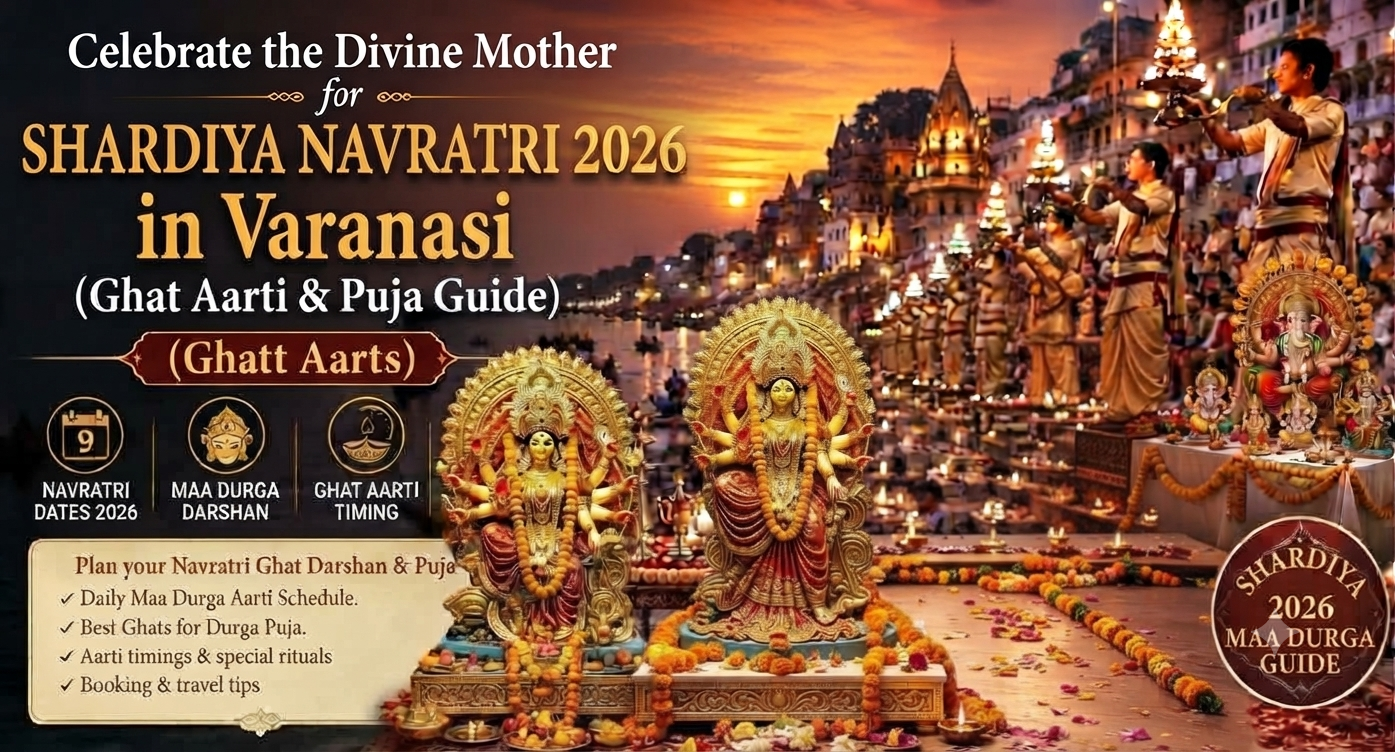
Shardiya Navratri in Kashi (Varanasi) is a deeply spiritual experience unlike anywhere else in the world. While Navratri is celebrated nationwide, Varanasi holds a unique and sacred distinction: it is the holy abode where the Navdurga—the nine divine forms of Goddess Parvati/Durga—reside in nine distinct ancient temples across the city.
According to ancient Kashi Khand, undertaking the Navdurga Yatra during Navratri liberates the soul, brings prosperity, and shields devotees from negative energies. If you are planning your pilgrimage or spiritual tour for Navratri 2026, this complete guide covers the historical routes, temple details, essential rituals, and how to elevate your spiritual journey through authentic Vedic chanting and sacred ceremonies.
The Significance of Navadurga in Kashi
In most places, devotees worship all nine forms of Goddess Durga at a single altar during Navratri. However, Varanasi preserves an ancient tradition where each of the nine days is dedicated to a specific temple housing a distinct manifestation of the Goddess. Pilgrims from all over India visit these sacred shrines sequentially to complete the coveted Navdurga Parikrama.
To enhance your spiritual focus during this auspicious period, many devotees also arrange for specialized home or temple rituals. You can explore our dedicated services for sacred Vedic Mantrocharan to invoke divine blessings during the festival.
Chronological Guide: The 9 Forms of Navdurga & Their Temples in Varanasi
Here is the chronological list of the nine forms of Goddess Durga worshipped across specific ancient shrines in Varanasi during Navratri, complete with routing and location insights:
Day 1: Maa Shailputri (The Daughter of the Mountain)
- Location: Alopibagh, Varanasi (near-railway station / cantonment area).
- Significance: Worshipped on the first day, Maa Shailputri represents nature, purity, and the primordial energy. She holds a trident and a lotus flower, riding Nandi the bull.
- Darshan Route & Tip: Located in the Alopibagh area, this temple gets extremely crowded early in the morning. Reaching here by 5:00 AM allows for a peaceful darshan.
Day 2: Maa Brahmacharini (The Goddess of Penance and Wisdom)
- Location: Bala Ji Ghat / Dashashwamedh Ghat area, Varanasi.
- Significance: The second form represents severe penance, knowledge, and calmness. She holds a rosary (jap mala) and a holy water pot (kamandal).
- Darshan Route & Tip: Easily accessible from the central ghat areas. While walking through the narrow lanes, you can also witness or participate in evening rituals such as the grand Ganga Aarti nearby.
Day 3: Maa Chandraghanta (The Bearer of the Half-Moon)
- Location: Chauk Bazaar / Golghar area, Varanasi.
- Significance: Worshipped on Day 3, she is adorned with a half-moon shaped like a bell on her forehead, symbolizing bravery, peace, and serenity.
- Darshan Route & Tip: Situated deep within the bustling old city markets of Chauk. Best visited via e-rickshaw up to the nearest accessible lane followed by a short walk.
Day 4: Maa Kushmanda (The Creator of the Universe)
- Location: Durgakund Temple, Varanasi.
- Significance: Believed to have created the universe with her gentle smile, Maa Kushmanda bestows health, wealth, and strength.
- Darshan Route & Tip: The Durgakund temple is one of the most famous landmarks in Varanasi, located near Banaras Hindu University (BHU). It features a sacred pond (kund) right next to the temple.
Day 5: Maa Skandamata (The Mother of Lord Kartikeya)
- Location: Vagishwari Devi Temple, Nahar Pul, Jaithpura, Varanasi.
- Significance: Depicted holding Lord Skanda (Kartikeya) in her lap, she showers maternal love, wisdom, and salvation upon her devotees.
- Darshan Route & Tip: Located in the Jaithpura locality. Plan your transit considering the narrow city traffic, especially during peak afternoon hours.
Day 6: Maa Katyayani (The Warrior Goddess)
- Location: Golghat / Maidagin area, Varanasi.
- Significance: Born to sage Katyayan, she is the fierce warrior form of Durga who vanquished the demon Mahishasura. She represents courage and righteousness.
- Darshan Route & Tip: Conveniently located near Maidagin, making it easy to combine with visits to other central heritage spots.
Day 7: Maa Kalaratri (The Destroyer of Darkness)
- Location: Kalka Gali, near Vishwanath Temple lane, Varanasi.
- Significance: The most ferocious form of the Goddess, Maa Kalaratri destroys ignorance, fear, negative energies, and evil spirits.
- Darshan Route & Tip: Nestled in the labyrinthine alleys close to the Kashi Vishwanath corridor. Navigating these lanes requires comfortable walking shoes and local guidance.
Day 8: Maa Mahagauri (The Symbol of Purity and Peace)
- Location: Shivala Ghat area (Bhadreshwar Temple), Varanasi.
- Significance: Radiant like a white moon or shell, Maa Mahagauri cleanses past sins and grants ultimate peace and fulfillment.
- Darshan Route & Tip: Located near the riverfront at Shivala Ghat. Visiting this temple around dusk offers a magnificent view of the Ganga.
Day 9: Maa Siddhidatri (The Giver of Supernatural Powers)
- Location: Mehdiganj / Madanpura area (Maa Siddhidatri Temple), Varanasi.
- Significance: Worshipped on Navami, she grants all types of spiritual and material accomplishments (siddhis) to sages, seekers, and householders alike.
- Darshan Route & Tip: Concludes the Navdurga Yatra. Thousands of devotees throng this temple on Navami for the final grand blessings before Kanya Pujan and Havan.
Frequently Asked Questions (FAQs)
1. What is the traditional route for Navdurga Darshan in Varanasi?
While devotees can visit the temples in any order due to modern traffic constraints, the traditional chronological order starts with Maa Shailputri in Alopibagh on Day 1 and concludes with Maa Siddhidatri on Day 9. Many pilgrims prefer hiring local guides or booking specialized ritual packages to complete the darshan seamlessly.
2. Can I perform special puja and sankalp online or in-person during Navratri 2026?
Yes. If you cannot visit all nine temples physically due to crowds or distance, you can arrange for authorized temple priests to perform your personal sankalp, chanting, and offerings. Explore our Mantrocharan services to connect with verified Vedic scholars for festival pujas.
3. What are the best times to visit these temples during Navratri?
Early mornings (5:00 AM to 8:00 AM) are ideal for peaceful darshan. Evening aarti times also offer a divine atmosphere, particularly for temples located near the riverfront where you can seamlessly merge your temple visit with the evening Ganga Aarti.
4. How can I plan my travel around Varanasi during Navratri festival days?
Traffic restrictions are common in the old city areas (Chouk, Maidagin, Godowlia) during Navratri and Dev Deepawali. It is recommended to use e-rickshaws or walk through narrow lanes, and stay at hotels close to the ghats or cantonment area for easier transit.